Begin with the end in mind
A day in the life
People who watch this working in a live demonstration usually say some version of “that can’t be real.” It’s the right reaction - people who build AI for a living have the same one.
So rather than argue, here’s my actual working day, told flat, exactly as it happens. For the person who took the dare on the front page, for the person who watched a demonstration and wants it to survive the drive home - and for whoever they’ll want to tell about it.
Before any of it
Who gets into the day
None of what follows works with the wrong people in it.
Every person you’re about to meet in this page passed through three selections before they ever reached my calendar. First, the hard facts - LinkedIn searches built on things you can count: years in the game, whether they’re active, whether they post. Then the system reads what’s left and scores each person on attitude - not job title, but what they write, what they care about, how they carry themselves. Most don’t make the cut. And the third selection isn’t mine at all: of the few I approach, the ones you’ll meet here are the ones who chose to have a call with me.
That’s why the conversations go the way they do - and why the numbers at the bottom of this page look the way they do.
First coffee
The morning
Before my first call I ask one thing: “Prep me for today’s meetings.” Back comes each person’s story - who they are, what we said last time, what I promised, what I should raise. In a recent demonstration it briefed me on the very meeting I was in at the time - including a heads-up that my guest and another man I’d spoken with that week carried the same credential and probably knew each other. They did.
And the standing dread anyone with a real network carries - who’s owed a reply, who’s gone quiet, what did I promise whom - is now one sentence: “Show me my follow-ups.” The whole queue, already triaged. Not a system I have to feed and check. A colleague who already checked it.
Mid-morning
The part everyone remembers
Most days I introduce two people in my network to each other.
The whole of what I say is:
Me, to Wingguy
The introduction, done - the full set of emails, each written to its reader from my calls with them, the transcripts, the emails, the LinkedIn threads.
What comes back isn’t a draft to work on. Each email speaks to its reader in the terms of their own world: what they’re building, why the other person matters to them specifically, what they said to me that made the connection obvious. I read them, and I send them.
Here’s the thing about introductions: everyone agrees they’re the most valuable move in networking, and almost nobody makes them - because doing one properly means re-reading every note you have on two people and then an hour getting the wording right. That’s why they don’t happen. Mine happen every day.
Between meetings
The booking
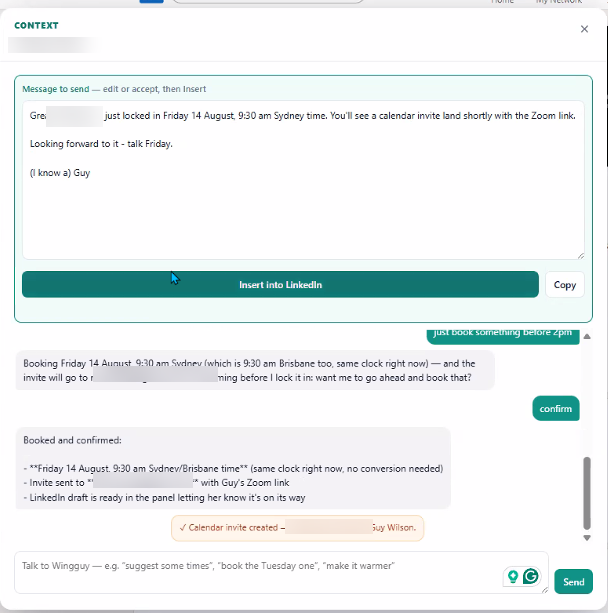
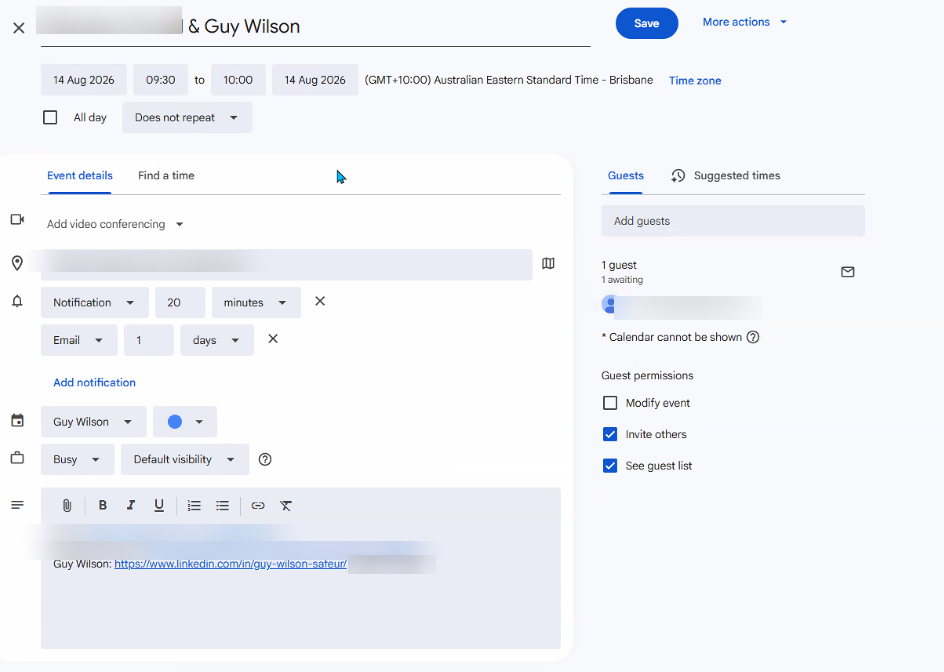
Last week a new connection in Perth suggested we talk. I didn’t send a scheduling link - I never do; being offered a few considered times is part of how I work. Wingguy read my calendar, offered him times in his timezone, and when he picked one it checked for clashes, confirmed with me, booked it, and built the invite itself - Zoom link, both our LinkedIn profiles, his phone number and email, all gathered from the conversation we’d just had.
I never opened my calendar.
Another booking, same flow
The overnight pile
“Sort it”
Two emails arrived overnight from someone juggling a meeting time - calendar reschedules with empty bodies, the kind of thing that eats ten minutes of squinting and cross-checking.
Me, to Wingguy
Read both emails, worked out his timezone, proposed the answer - and offered to make the booking.
All day long
The messages
The messages it writes - the thank-yous, the replies, the outreach - are drafted from everything it holds: the thread, the person’s profile, our whole history. Nothing is ever sent without me reading it. And the honest description isn’t “better than I’d write” - it’s what I would have written with twenty minutes and total recall, delivered in about twenty seconds.
When I do want something different, I tell it once - “from now on, do it this way” - and that becomes one of its standing instructions. It writes more like me every week.
And yes - a message that well-informed often reads like AI helped write it. I don’t hide that. It gets things right because it has the transcripts and the emails and everything in between - and what it writes is what I meant.
Once a month, the tally
The numbers
I’ll keep this modest, because it’s one campaign and your field may differ. Over the past month, of the connection requests my system sent to people it had scored highly, about six in ten connected. If you’ve ever done cold outreach, you know what your own number was.
The difference isn’t clever wording - it’s the selection you read about at the top: reaching out only to people scored on attitude, not job title.
And that’s the day
What’s left for me
The noticing, the generosity, the conversations - still mine, still the point.
The remembering, the tracking, the drafting, the chasing, the diary work - no longer my job. That’s the whole trick. I only do the part that needed a human, which is why I can do so much more of it.
If this reads as impossible
Whether you took the dare on the front page or someone forwarded this to you - you haven’t seen it happen, so you have every right to disbelieve it. Fair enough. It’s exactly why I stopped explaining this and started showing it.
And to be clear about what “showing” means: there is no demo version, and nothing is staged. This is the system I run my own working day on - so I simply share my screen and do my actual work in front of you. My real network, my real inbox, live. Fifteen minutes is usually enough.
Ready to talk? Write to me - I read and answer these myself. Want the thinking behind it first? The library holds the whole method. Not yet? Perfectly fine - the email series covers it one short piece a week, no rush and no hard sell.